Showing posts with label ELCRK. Show all posts
Thursday, March 1, 2018
Friday, December 29, 2017
Council of Bishops Meeting
Omsk
On April 24th at the end of the celebratory events related to Bishop Scheiermann's installation, the annual meeting of the Council of Bishops of the Union of Evangelical Lutheran Churches (ELC) was held in the Christ Church Center. Tradition has it that the meeting takes place every year in a different member church of the Union. This year attending were: ELCR Archbishop Dietrich Brauer, Bishop Alexander Scheiermann of the ELCUSFE, Bishop Alfred Eicholtz from the Evangelical Lutheran Church of the Republic of Kyrgyzstan, and the chair of the Union, Bishop Yuri Novgorodov from the Evangelical Lutheran Church in Kazakhstan. The other bishops of the Union – Hans-Joachim Kiderlen from Georgia and Sergei Mashevski from the German Evangelical Lutheran Church of Ukraine, had scheduling conflicts that did not allow them to attend.Friday, October 21, 2016
Harvest Sunday Photos from our Congregations
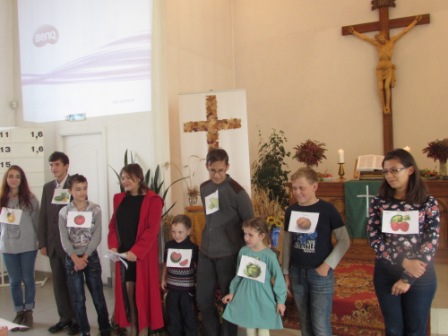
On October 2 congregations from around the Union of Evangelical Lutheran Churches praised God for this year's harvest and for all the good things our Lord gives to us.
Astana:
Berdyansk:
Gusiev:
Kazan:
Kresttsy:
Novgorod:
Novosibirsk:
Omsk:
Perm:
Poltava:
Samara:
Syktyvkar:
Tashkent:
Tomsk:
Ufa:
Ulyanovsk:
Vladivostok:
Yalta:
Zhitomir:
Monday, March 7, 2016
Lutherans in Kazakhstan Build Their First Church Building
Since 2003 the prayer house of the congregation in Astana has been located in a demolition zone. Constant changes in the economic situation means that the timing of this demolition is uncertain, but what is clear is that sooner or later the moment will come when the building will be torn down. In order not to end up without a home for the congregation they and the leadership of the Evangelical Lutheran Church in the Republic of Kazakhstan have decided not to wait the demolition notice, but to begin construction of a church.
The city set aside a lot for the construction in 2014. A building plan was made and submitted for inspection. In May 2015 the construction process began.
This is the first time Lutherans in Kazakhstan have had the opportunity to build an actually church building, rather than a prayer-house like construction. There will be two buildings on the church grounds - one will be the church itself, with a large and bright first half floor; there, according to plans, youth and diaconal ministries will be centered.
The other building will have 3 stories and will include: on the first floor - space for congregational work, Sunday school, the pastor's office and the library. On the 2nd floor - the Church administration, the archive and seminar rooms. On the 3rd floor there will be 8 2-person guest rooms will a small kitchen/dining room.
At present the ground floor of the church building is up, as are all three floors of the other building. The buildings are hooked up to electricity and work is being done on the plumbing.
The structures are being built with the help of offerings from citizens and organizations in Kazakhstan, and we are very thankful to those companies that have helped: the "Astana" engineering center for the plans, the general contractor KazGerStroy," and the following building companies: the BIGroup, Alyansstroyinvest, Bazis, HeidelbergCementCentralAsia, Gornoe Buro, Zhambylskaya Cement Production Compnay, Strokonstruktsiya, Knauf, Funke-Kazakhstan, Astana Su Arnasy, Baly Mining, Akmola-Feniks, Geotek, Akpan, Iskander, KSPSteel, Ulmusbesshoky, Brick Factory #1 "15 years of Kazakhstan," Kaztsink. We thank as well the city of Astana, the Committee of Religious Affairs of Kazakhstan, and the Administrator of Religious Affairs of Astana.
We thank as well all the congregations of our Church, our ciricle of friends in Mecklenburg. We thank personally Albert Rau, Sergey Emirova and many, many others.
Kazakhstan is a surprising country, where around your Christmas table the majority might be Kazakhs. And at Muslim holidays in Kazakh homes around the traditional Central Asian tablecloth you will see representatives from the whole former Soviet Union - Russians, Ukrainians, Germans.. That's how we live. It is our heritage - we learned from our ancestors how to get along with and value our neighbors.
And so they are helping us building our church, despite our differences in ethnicity and religion. And we are thankful to God and to our fellow countrymen.
Yuri Novgorodov, Bishop
Labels:
Astana,
Church Restoration,
ELCRK,
Kazakhstan
Location:
Астана, Казахстан
Wednesday, February 10, 2016
"Creating Empowering Learning Opportunities for New Diaconal Initiatives." Odessa
Odessa
In
St. Paul's Church on November 23-26 a seminar was held through the
International Academy of Diaconal and Social Work
"Interdiac" (www.interdiac.eu)
together with the German Evangelical Lutheran Church in Ukraine.
Participants, each of which in one way or another is responsible for
diaconal work in his or her church, came from Evangelical Lutheran
churches in Kyrgyzstan, Kazakhstan and Ukraine.
The
leaders of the seminar were Yanka Adameova and Barbora Zielinova
(Cheski-Tesin, Czech Republic). The goal of this meeting was to
develop cooperation between the organization and the Union of
Evangelical Lutheran Churches. At present the "Interdiac"
academy, which offers unique experiences for studying social work and
exchange of experience, interacts intensively only with the Ukrainian
church.
On
the opening day participants became acquainted with one another and
also shared their expectations of the meeting. The day finished with
Taize prayer, led by GELCU Bishop Sergei Mashevsky.
On
the second day the participants spoke about the organizations that
they represented. Each person drew their organization as a ship with
leaders and passengers and then explained the pictures in detail.
With the help of other pictures - "lines of life" -
participants tried to understand their own biography, especially
crucial moments that brought them to work in the church or in the
sphere of diaconal work. In the evening each person had the chance to
speak about his or her country and its culture.
The
guests of the seminar became acquainted with a a concrete example of
diaconal work in Odessa. Vitaly Mikaikhlik showed them St. Paul's
diaconal station and especially spoke about the help given to
refugees fleeing the military conflict in eastern Ukraine.
Nicole
Brisjuk talked about the work of the "Living Hope"
organization that does social work with underprivileged children and
youth.
Oksana
Prosvirnina spoke about the on-site/off-site educational program of
Interdiac, which is open to all who wish to develop their skills in
the area social work. Participants discussed these possibilities with
her.
The
group made a tour of Odessa and had supper together, which helped
everyone get an impression of the local culture and also to hear
interesting personal stories.
Before
leaving participants of the seminar spoke about their vision of how
cooperation for continuing education in the sphere of diaconal work
might take place and how to strengthen local diaconal initiatives.
The interest of and willingness of participants to take on
responsibility give hope that there will be good cooperation in the
future. Thanks to the seminar new contacts were made and with them
new possibilities arise. Participants received motivation for further
work which should in the near future bear good fruit.
Yanka
Adameova, Barbora Zielinova
Saturday, November 21, 2015
Council of Bishops of Union of Evangelical Lutheran Churches
Astana, Kazakhstan
On April 21-23 in the capital of Kazakhstan, Astana, bishops from the former Soviet Union together with church administrator Marina Khudenko and EKD representative Michael Hubner met to discuss common issues and to sign a new version of their agreement on mutual cooperation. In addition the participants signed an agreement related to the spiritual care of congregations in Crimea. From now on three church bodies will have the right to work there – the German Evangelical Lutheran Church of Ukraine, the Evangelical Lutheran Church of European Russia and the Evangelical Lutheran Church in Bavaria. Congregations can now legally register in the Russian Federation and will be full members of the ELCER; they will also have the right to attend the meetings of the GELCU as guests with a voice, though without a vote. A third important decision was that all of the churches of the Union are given the right to independently join such international organizations as the LWF and the Conference of European Churches. It was also agreed upon that the question of the Union's membership in the World Council of Churches needs to be studied. Finally, the participants of the Union elected Yuri Novgorodov from Kazakhstan as the President of their council for the next two years.
In addition to meetings the bishops took part in ecumenical meetings with representatives of the Roman Catholic and Orthodox churches and found time to talk and pray together about their brothers who were unable to attend – Otto Schaude and Corney Vibe.
Tuesday, October 27, 2015
Together We Can Accomplish More!
Tbilisi, Georgia
Vladimir Vinogradov writes: “We are very far apart, geographically speaking. But all the same we are tied together by faith and many years of friendship (three of us studied together at the Theological Seminary in Novosaratovka.) It is so important for us to support this fellowship, to remain close and to work up a plan of cooperation. Youth coordinators from around the Union of Evangelical Lutheran Churches (formerly ELCROS) met in the Georgian capital from the 13th to the 16th of November. The Church of Reconciliation opened wide its doors for us. Represented were the coordinators from the Evangelical Lutheran Church in Russia – Vladimir Vinogradov (ELCUSFE) and Vera Tkach (ELCER), as well as Nikolai Vorobyev (Evangelical Lutheran Church in Kyrgyzstan), Igor Shemigon (German Evangelical Lutheran Church of Ukraine), and David Dzhandieri, Irina Soley and Irina Mamisashvili (Evangelical Lutheran Church of Georgia). A special guest at the gather was the leader of the “Evangelical Youth in Germany” movement, Dirk Thesenvitz. One of the main questions we asked at the meeting was whether or not to form an “Evangelical Youth” movement uniting young believers regardless of their country of residence. Our brother Dirk, who has done youth work in the Evangelical Church in Germany for many years, shared his experience with a similar initiative. Everyone liked the idea, and we began to discuss such practical questions as creating a logo, structure and formulating the general principles of the movement. In discussion it became clear that the yearly “Youth Sunday” liturgy does a lot to unite young people from various regions. We agreed to continue the good start that was made at this meeting using the draft documents that Vladimir Vinogradov prepared. We also touched on the need to modernize confirmation lessons for children and youth; because we don't have enough modern confirmation books and other materials, it was decided to make a new translation of some of the older, though successful programs. We also remembered the important theme of education for youth leaders and the necessity of holding seminars and conferences for them. It was noted that the International Bible School in Ukraine is still open as before for youth leaders both in “on-site” and “on-/off- site” programs. One of the most important questions was the best way to use the Internet; concretely, how to find the best content for the children's www.nebesite.ru site and the “youth and children's work” section on www.elkras.ru. The coordinators made a calendar for renewing materials and came up with a “to do” list in order to most effectively use these common, virtual resources.
Since the members of this group are far away from one another and don't have the chance to meet often, they agreed to meet for a monthly on-line conference which will certainly become a good instrument for the further coordination of events and for deciding current issues. Of course it is important that these annual face-to-face meetings continue into the future. The next meeting is scheduled for November 2015, in agreement with the council of Bishops, in Bishkek. Finally we discussed the status and leadership of the Committee of Youth Coordinators; it was agreed that Vladimir Vinogradov would continue in this position until the 2017 Reformation anniversary celebrations.
The work of the coordinators was arranged in such a way that it was possible for them to spend time with the youth of the host congregation. Vladimir Vinogradov led a seminar called “Youth Ministry” for the youth group of the Georgian Lutheran Church. Young Christians not only received useful materials about the types and means of youth worship services, but also helped them to actually lead such a service on Sunday evening in the Church of Reconciliation; Igor Shemigon and Vladimir Vinogradov preached, while the local youth themselves took on all the other tasks. Despite initial doubts about their own abilities, the youth did a great job. Afterwards they received the recommendation to hold a youth service in the congregation once a month. Perhaps that will provide an answer to the question that frequently came up in our days of meetings – how might it be possible to draw non-Christians to the Lutheran church? All the coordinators suggested their own answers to this question; it was particularly interesting to hear the experience of Nikolai Vorobyev, who is serving in a Muslim country. It was a blessing for the coordinators to have the chance to participate in Sunday worship. Pastor Vladimir Vinogradov gave a word of greetings there; Igor Shemigon preached, and Pastor Nikolai Vorobyev and coordinator Vera Tkach were readers. The coordinators expressed their thankfulness to Pastor Irinia Soley and everyone else in the local congregation for their hospitality and for making our time in Tbilisi an unforgettable blessing. Thanks were also expressed to the head of the Youth Coordinators' Committee, Vladimir Vinogradov for his hard work, optimism, and organization of the meeting and to Vera Tkach for her help in translating, for playing piano and taking pictures.
This meeting showed once again that when we are together we can accomplish a lot!”
Subscribe to:
Posts (Atom)